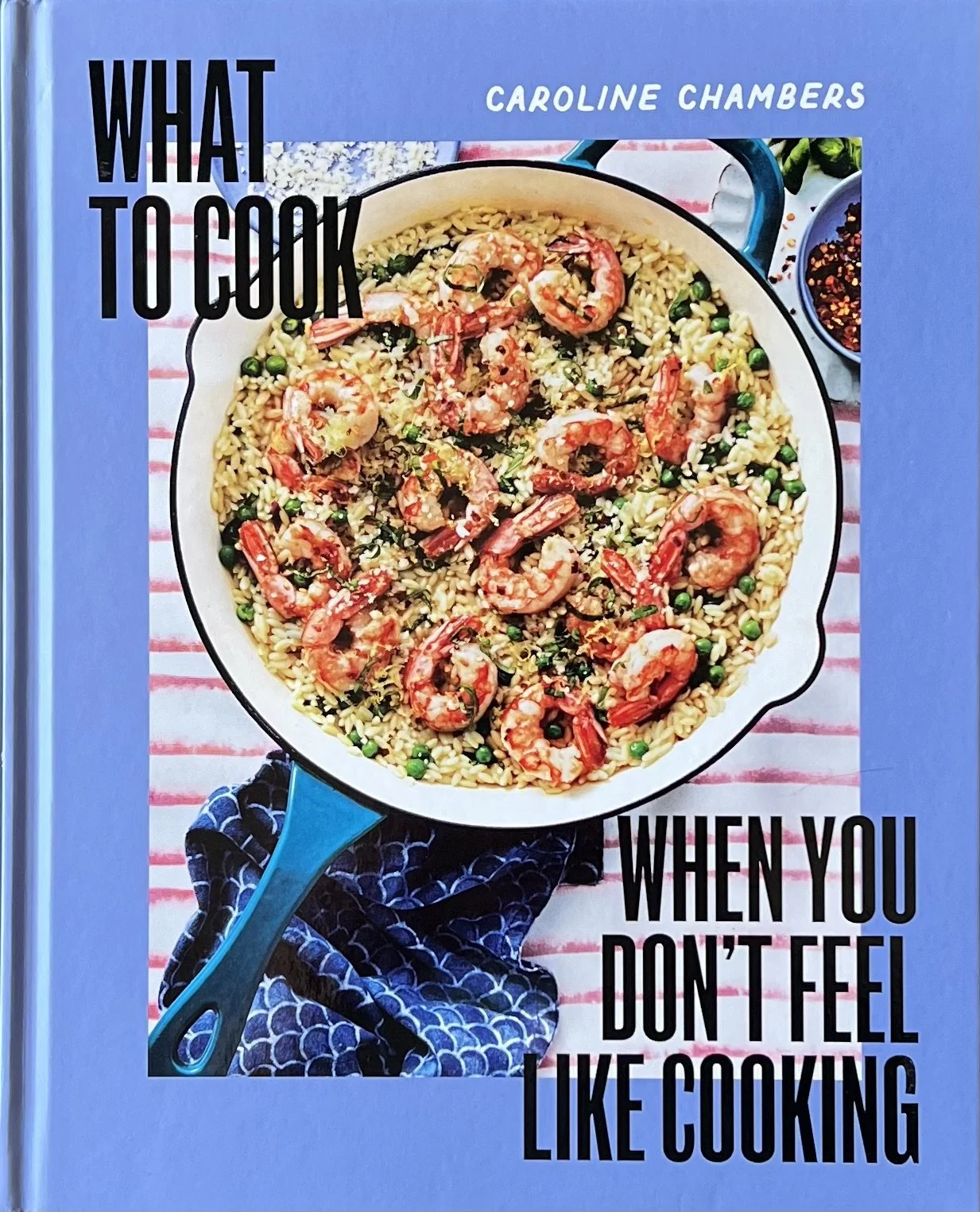
The following recipes in What to Cook When You Don’t Feel Like Cooking by Caroline Chambers can easily be made without gluten and the top nine food allergens*.
*Only nine foods are responsible for about 90% of food allergies in the United States. They are: wheat, milk, soy, egg, peanuts, tree nuts, fish, shellfish, and sesame. These recipes can easily be made without those top allergen ingredients.
The specific recipes below have been audited. It’s important you understand that your version (of the same recipe) may not follow Without Options guidelines.
Full recipes are found in the cookbook (they’re not mine to share), but you can borrow a copy from your local library or purchase your own here.
KEEP IN MIND: I’ve only audited the main recipes — author notes, variations, and serving suggestions may contain gluten & the top allergens.
You are responsible for sourcing safe ingredients. Check out my Food Label Guide to learn how.
Recipes with an asterisk * can also be made vegan.
QUICKIE VEGGIE CHILI (OMIT SOUR CREAM & SHREDDED CHEESE) pg 107*
SPICED CAULIFLOWER & CHICKPEAS pg 163*
SHEET PAN CHICKEN POBLANO FAJITAS pg 191
CRISPY ROSEMARY CHICKEN WITH SCHMALTZY BALSAMIC CABBAGE pg 199
SLOW-COOKED BBQ RIBS & RANCH-Y POTATOES pg 222
SAUTEED GREENS pg 248*
CRISP GREENS pg 249*
Always use safe handling practices when preparing gluten and allergen-free recipes:
Wash hands with soap and water (hand sanitizer does not remove allergens).
Wipe down all surfaces and use clean equipment.
Avoid cross contact of ingredients that aren’t safe and be mindful that allergens can become airborne in flour or powdered form.
Don’t share equipment among recipes. For example: use a dedicated spoon for regular pasta and another for gluten-free pasta — don’t use one spoon to stir both pots.
Clean your grill, use a clean grill pan, or tin foil barrier when preparing a Without Options recipe.
Save the packaging (or snap a photo of the ingredient list) of any processed items you use in a Without Options recipe. You can then share that information with your food sensitive guests if necessary.
Spirits and liquor are exempt from labeling laws and may contain allergens. For this reason, always consult guests before serving them alcohol (whether in a recipe or on it’s own).
Regarding processed ingredients: Always inspect the label of each product, every time, as manufacturer’s recipes and formulas can change (often without warning) and can vary between product size.