
SOURCING SAFE INGREDIENTS
How do you know if a product is free of the top nine food allergens?
According to the United States Labeling Laws:
“As of January 1, 2023, all packaged foods containing any of the nine major food allergens must be labeled (with the exception of meat, eggs, and alcohol).
The nine major food allergens in the U.S. are: wheat, egg, soy, milk, peanut, tree nuts, fish, shellfish, and sesame.
If a product contains any of these allergens, manufacturers have to disclose that information in one of three ways:
Using clear language within the list of ingredients
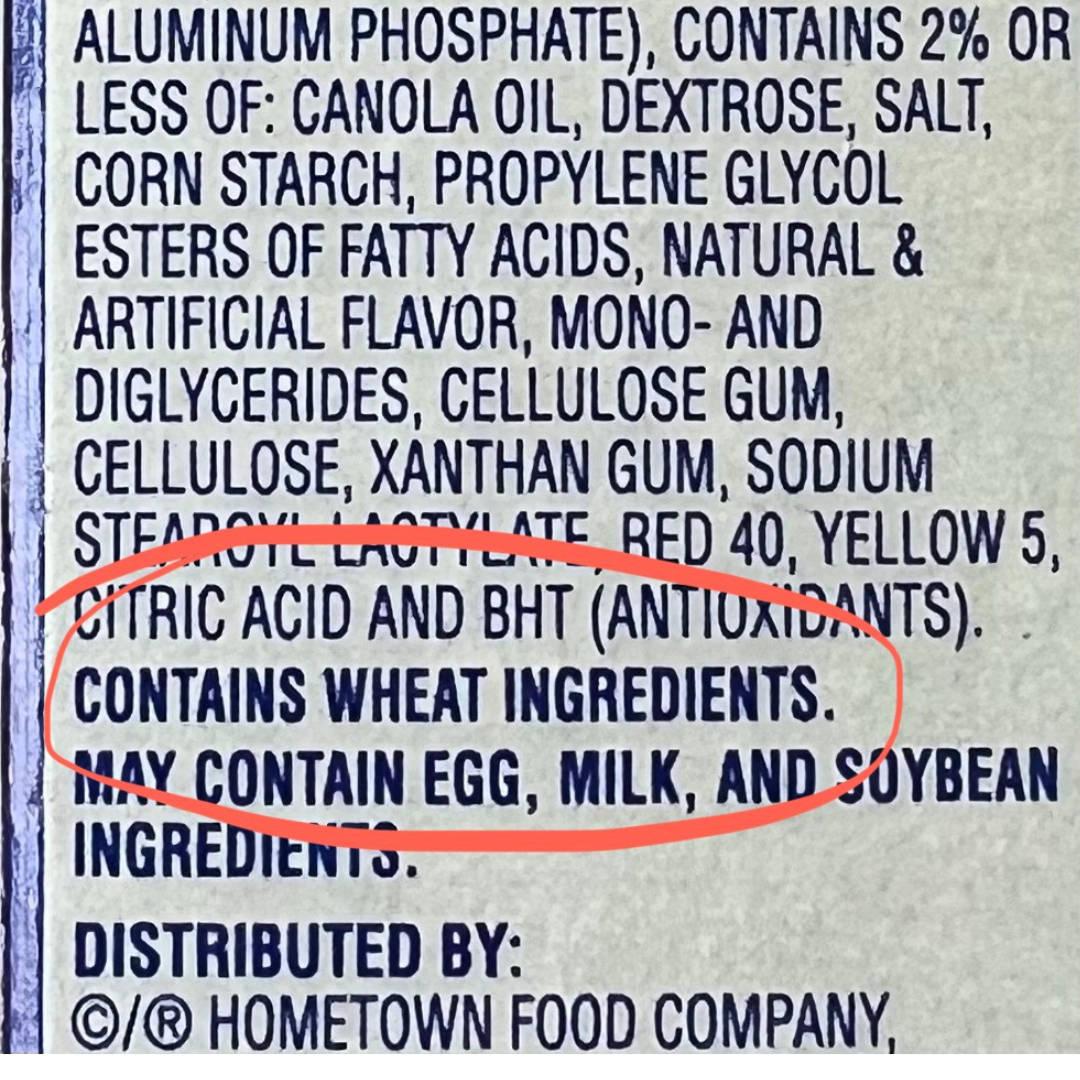
Using a “contains” statement — i.e. “Contains milk and wheat”
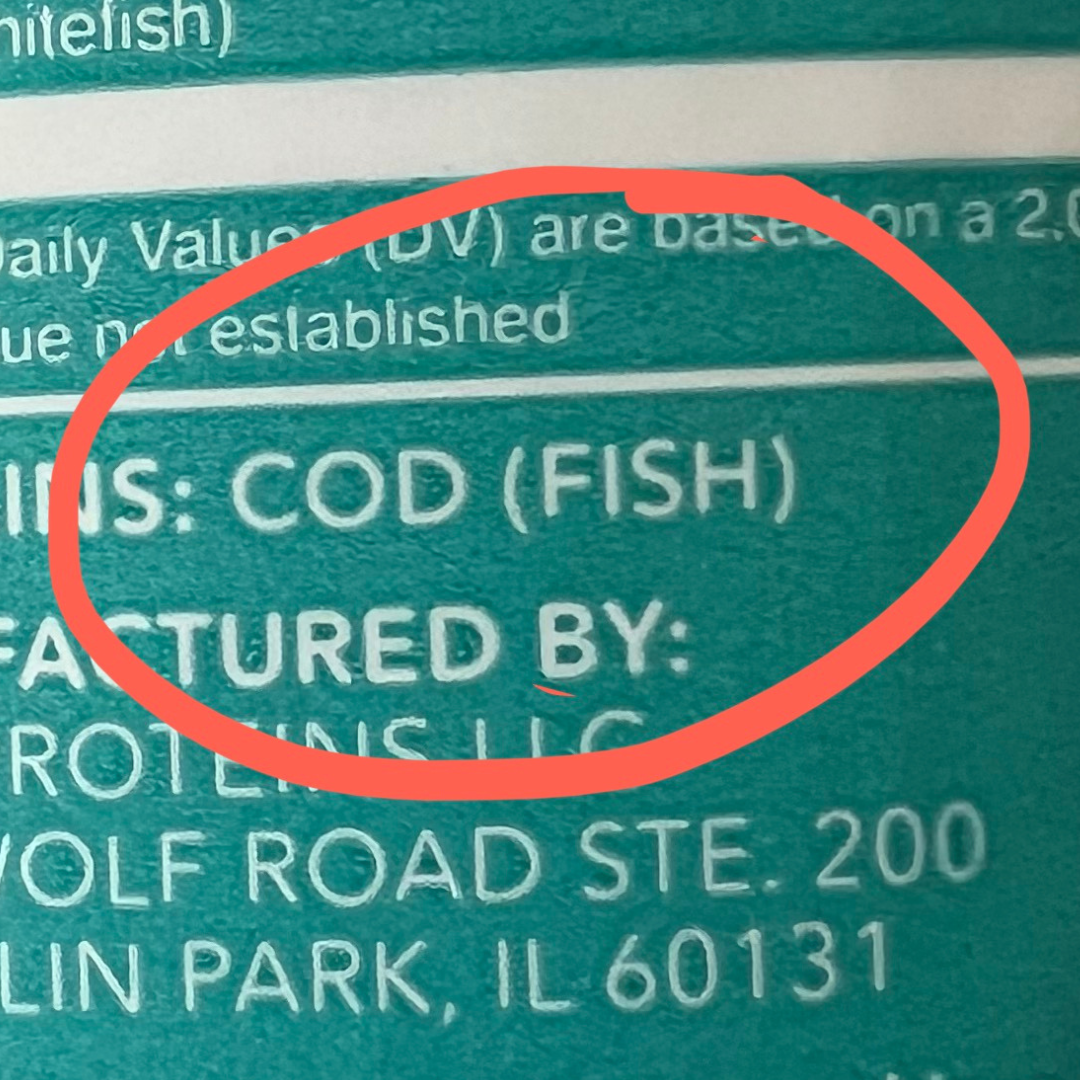
Or in parentheses — i.e. “albumin (egg)”
These ingredients must be listed if they’re present in any form — even in colors, flavors, or spice blends. Manufacturers also have to list the specific nut (e.g. almond, walnut, cashew) or seafood (e.g. tuna, salmon, shrimp, lobster) that’s used.”
WRITTEN IN PLAIN LANGUAGE:
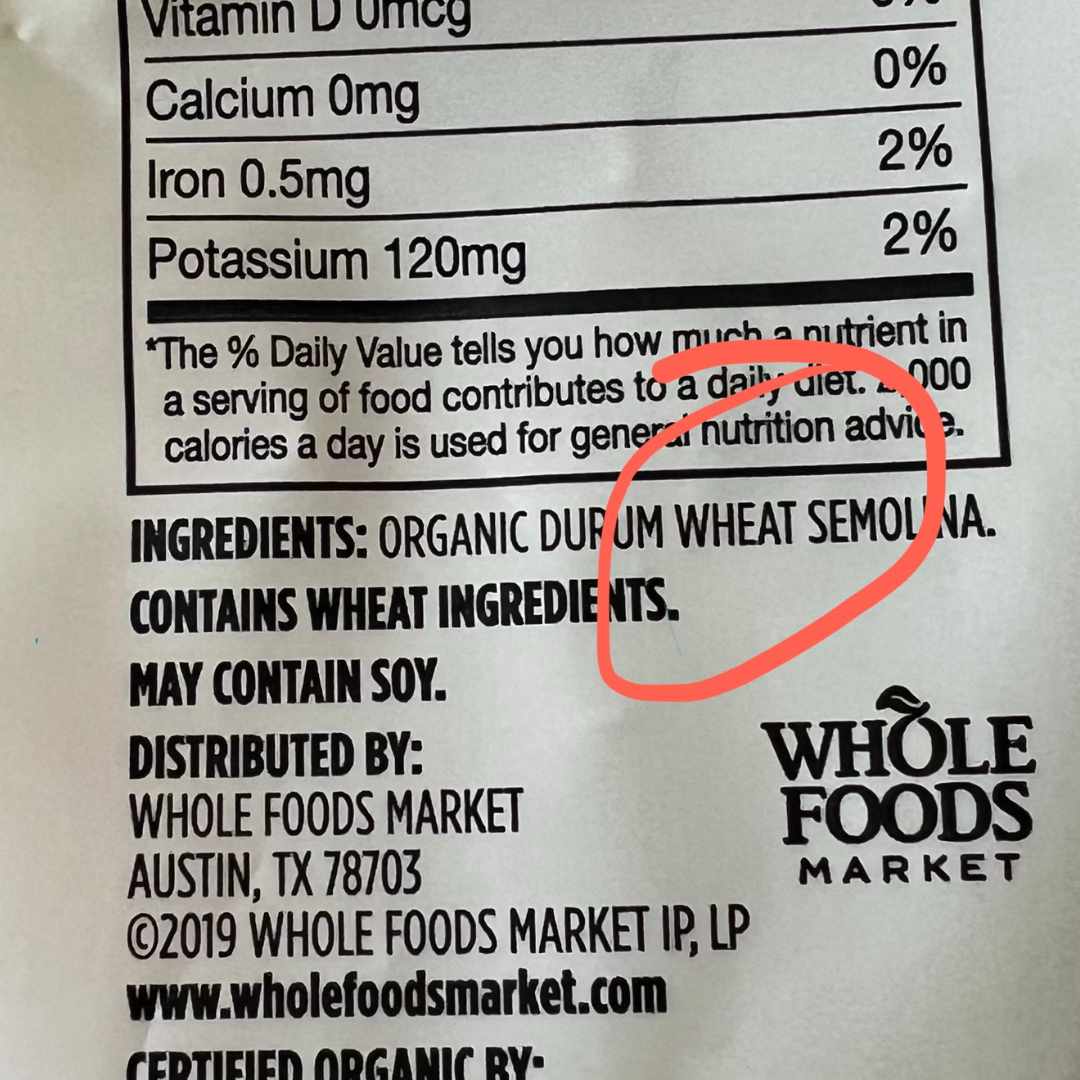
USING A ‘CONTAINS’ STATEMENT:
CALLED OUT IN PARENTHESES:
If a product has any of the top allergens called out on the label (in any way), it’s not okay to use in Without Options™️ recipes. But…
If nothing is listed — it’s top allergen free!
PLEASE NOTE: Highly refined oils made from top food allergens are except from the labeling laws. The refining process is said to remove most of the proteins, making those with allergies able to tolerate the oil. That said — most is not all — and it’s been my experience that people with allergies avoid their trigger foods in any form (which is why I encourage chefs to avoid all oils made from top allergens, regardless if they’re highly refined or not).
REGARDING
“MAY CONTAIN” STATEMENTS:
These statements are a courtesy for those with severe allergies and not required by law.
Do your best to find products without these statements. If that isn’t possible, snap clear photos of the product labels (front and back) so you can easily share the information with guests who have severe allergies.